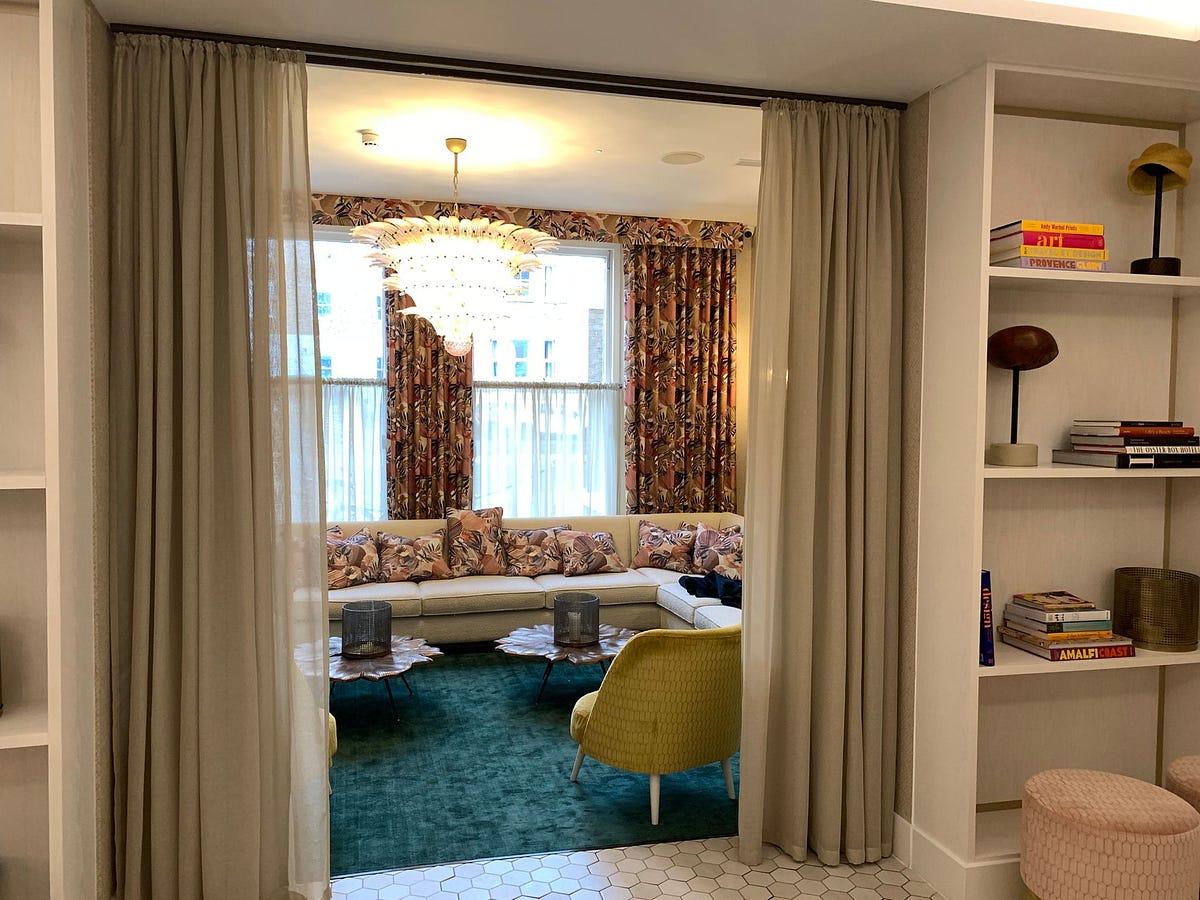
Choosing fabric by the meter is a method of creation, where a flat length of textile transforms into something that moves, whether it's the graceful drape of a curtain or the fluid shape of the silhouette of a dress. However, the process from the bolts to the finished product is not without risk due to mistakes that could be made, as window coverings and clothing have very different requirements. This guide goes beyond basic fibre content and explores the nuanced issues that are often neglected. These aspects can make a project success or fail. We'll dive into the haptic nature of fabric and the local shopping culture of the West Midlands region, and the crucial conversations that need to be held with the fabric and manufacturer. Knowing these layers will ensure that the fabric you choose is a perfect, enduring fit for their intended purpose.
Details Top 10 Things to Know:
1. The Drape Dichotomy: Curtains Need Architecture, Dresses Need Kinetics.
The primary difference is the need for movement. The fabric for curtains must be able to "remember the structure". It should fall in graceful folds that are consistent (like the structured wool or heavylinen) and maintain its shape even when in the gravity. The fabric you wear for dress must have "kinetic elegance"; they must move along with the body. They must recover from stretch and compress without wrinkles. Don't touch the fabric while in a store. Instead, crunch the corner of it using your fist. A good curtain will release slowly while holding onto the crumple ghost. A quality dress fabric will bounce back quickly and withstand the crease.
2. How to shine your fabric metres.
It is a very important test, however it's an extremely personal one. Never buy curtain fabric in meters without copyrightining the samples on the actual window. Watch how the morning sun alters the colour of your fabric, how midday light brings out the true weave texture and how it appears in artificial light. If you are looking for dresses, put the bolts in a shop with fluorescent lights as well as when it's possible, in natural sunlight. The colour of a fabric that is vivid and vibrant indoors will look flat and dull in sunlight.
3. The Selvedge Decoder Ring Unlocking Hidden Fabric Intelligence.
The tightly woven edge of the fabric bolt is a strip. The printed edge of curtains or upholstery fabrics will feature the logo of the manufacturer as well as the name of the collection and, most importantly, certifications for fire retardancy and cleaning codes. Selvedges on dress fabric reveal finishing processes. An even and firm edge is a sign of a top-quality fabric. In the Lichfield shop an experienced assistant will clarify the history of the fabric by reading the selvedge.
4. The Shrinkage Sovereignty.
It's the basis for professional outcomes. For any dress fabric that is measured by the metre (except wools that are dry-clean only) You must wash it prior to washing and press it precisely as you intend to care for the final garment. This "sanctifies" the metre, and permits all shrinkage prior to a single cut. Also, you must consider the professional cleaning method when it comes to curtains. Your curtain manufacturer is likely to include header and fullness allowances when calculating their prices to account for shrinkage.
5. The hidden metreage multiplier The Pattern Match Calculus.
The metreage that you need could be doubled if you don't look at a beautiful pattern on the fabric. For both dresses and curtains, you must calculate based on the pattern repeat, not just length. For curtains that you have made to order, the panels should be cut in a way that the pattern matches horizontally across the joint when closed. This wastes fabric at each drop. If you want to put a large floral design in the center of the bodice of a dress, you need to cut a precise cut that could add to a half-foot. Birmingham's Trade Shops will do your math; smaller Walsall stores might assume you are aware.
6. Curtain Fabrics for an Environmental Mediater: Acoustic and Thermal layer.
The choice of curtains by the metre is an environmental design choice. Heavy velvets, or triple-weaved woolen fabrics serve as thermal mass, protect against warmth and cold and soften echo in rooms. A lightweight voile is only an acoustic diffuser that is light. For dresses, this layer is not significant, since it's focused on the individual microclimate (breathability or wicking). You can inquire specifically about "thermal mass" and "acoustic density" in Birmingham's specialist fabric warehouses. They'll have the words for theatres or hotels but they're perfectly applicable to a noisy Victorian Bay Window.
7. Local Shop Specialism Spectrum. Which fabric intelligence can be found in which shops?
If you're searching for dressesmaking materials, your locale within the West Midlands will guide your search. For sophisticated dressmaking fabrics (silks, technical jerseys, haute couture wools) look for Lichfield's carefully selected independents, where the employees are likely to be garment makers themselves. For large curtain and upholstery fabric Birmingham's warehouses that are trade-oriented and markets supply the right weight, volume and technical specifications. Walsall offers a wide range of shops that offer domestic items at a good price as well as basic cotton fabric for dresses. If you're searching for delicate silk at the Walsall discount shop, or upholstery velvet in the Lichfield boutique that focuses on dresses, it is likely that it won't be available.
8. The "Railroading Revelation: A curtain maker's secrets to a seamless wide.
The traditional technique of joining panels vertically results in visible seams on large windows. Railroading is a modern solution. When you choose a fabrics that have patterns that runs parallel to the edge it is possible to cut the length of your curtain by subtracting the fabric width. This creates one seamless drop that extends to the length of the fabric (often about 3m). Not all designs are suitable for this. The first thing you ask yourself when you look at a huge pattern for curtains made to measure in Birmingham should be "Can this be railed?" This can eliminate vertical seams however it will require more accuracy in the production.
9. The Handle Versus Drape Paradox of Dress Fabric
"Handle" Handle, the sensation of a hand as you move the fabric, and "drape" how it stretches under your weight. Both are distinct. A taffeta with a crisp texture will have an active hand, however a rigid, architectural curtain. A thick silk charmeuse comes with a slippery handle but a liquid, body-clinging drape. You can request to see the material draped on a table, or even on your arm. Fabrics can be gorgeous to handle (good handle) however they aren't able to be able to fall properly (bad drape). Birmingham market stalls which refuse to let a bolt of fabric unwind can be dangerous for dressmaking.
10. The Maker's Code: Your First discussion before buying a single Metre
Before you purchase material by the metre to use for an important project, have a provisional discussion with the maker you are considering. A curtain maker can to give advice about the necessary fullness (normally 2x to 25x the length of the rail) and the compatibility of the lining and header styles, which affects the length of cut. Dressmakers will also discuss pattern compatibility as well as ease requirements and seam finishes. A meeting with a curtain workshop based in Walsall or a Lichfield seamstress based in Lichfield will ensure that the stunning metres you purchase will be transformed by their tools and methods. It transforms a simple purchase into the first collaborative stage of creating. View the recommended fabric shops for blog recommendations including measure curtains, curtain fabric, blinds venetian blinds, curtains buy, curtains uk, curtains on a window, measure curtains, window with curtains, curtain and blinds, curtains and tie backs and more.

Figuring Out What You'll Need To Do To Diy Curtains & Upholstery
It is often the case that creative ventures do not manage to go from admiring a fabric metre by millimetre, to making sure they purchase the quantity required for DIY projects. Two spectres: the waste and the shortage. This can lead to over-ordering, or even an entire project being halted in the middle. This guide explains calculation of curtains and upholstery, using hidden variables like pile, pattern, behavior, and the width and length. The guide applies this math to the practicalities of finding fabric in various stores across the West Midlands. These rules will assist you transform from a buyer who is hesitant into an experienced buyer, who is able to negotiate with markets, boutiques and trade counters.
10 Things You Must Know to Be aware of:
1. The "Fullness Factor" A flimsy notion. Why You Should Double (Not Match) The Width of Your Rail.
The most frequent DIY error is to buy fabrics that don't match the exact measurements of your curtain track or pole. This results in flat, sluggish curtains. Professionally designed curtains have an "fullness factor" of 2 to 2.5 times the width of the rail. This excess is pleated to create luxurious lightweight blocking folds. The first step is to multiply the width of the rail by 2.5" to determine the amount of fabric needed. If you want a 200cm rail, you'll require 500cm (five metres) of fabric width *before* factoring in repeats of pattern. For a professional appearance you must know this prior to entering any fabric shop.
2. The hidden multiplier that controls your meterage is the Pattern Repeat Tax.
If you select a patterned material, your calculations shift from basic math to strategic planning. Make multiples of the vertical pattern repeat. This measurement can be found by copyrightining the fabric label or measuring from the top of the pattern until a spot below. The formula to calculate the repetition number is: **[(Finished Height + Heading and Hem Allowance)/Pattern Repeat = Required Number. ** Round this number *up*, then multiply by the Pattern Repeat to get your cut length per drop**. A 250cm with a repeat length of 64cm will need 3.9 repeats. The number is then rounded to 4. 4 x64cm gives 256cm. The "waste" is crucial to ensure alignment of patterns.
3. Buy by width and not length.
Sewing seams that are not properly sewn is the biggest issue with wide upholstery projects like a large sofa or head board. Railroading is the solution: use your fabric width to calculate the length of your work. If a fabric measures 137cm in width, and the length of your sofa's seat is 220cm long, it's normal to join two pieces. If the pattern is flexible (ask the store! You could cut the 220cm width of fabric by its width*, if the fabric is long enough on the bolt. This requires greater length initially however it produces an unidirectional fabric. Birmingham's trade counters have perfected this method, but Walsall might need to have the concept explained.
4. The Dressmaker's way of making curtains: Why you must take care to respect the fabric's "grain."
As in dressmaking it is important to cut curtains "on grain". For a straight curtain and a straight drape, the threads that make up the fabric's warp (running parallel with selvedges) must be vertical. Take note when calculating the length of extra-long curtains that certain furnishing fabrics comes with a "nap". It is a pattern that runs in a direction (like a stylised flower or velvet). It's crucial that each drop is cut exactly the same. If not, then waste will occur. If you are in Lichfield's fabric shops that specialize in fabric for dresses, and tell them that you want to "cut straight grain for drapery", will immediately bring you in line with the expertise of these shops who know the grainline integrity more than other furniture retailers.
5. The Lichfield Loophole.
Most dress fabrics are 110cm-150cm wide, while standard curtain fabric is 137cm-150cm. Fabrics for dresses are typically 110cm - 150cm in width, whereas standard curtain fabric measures between 137cm and 150cm. To achieve your required **Total Fabric Width** (from point 1), you'll need to join more panels, which affects both seam allowance and pattern matching. The calculation is the following: **Total Required Fabric Width/Fabric Bolt Size = the number of panels. ** Round up. The final metreage is calculated by multiplying this number by your **Cut length**. This can result in you needing more metres than with wider fabric, but this is usually balanced by the uniqueness the cloth.
6. The "Upholstery Fabrics By Metre" Puzzle Calculating Cushion Boxing and Buttoning.
For upholstery, the calculation for a flat seat or back is easy width + seam allowance by length + seam allowance. Complexity arrives with boxing (the strip of the sides of the cushion) and deep buttoning. If you are boxing your cushion, add the seam allowance as well as the measurements of the cushion's circumference to determine the length. When you are making deep-buttoned backings, double the flat area is required to accommodate the fabric to be drawn into the tufts. Shops located in Birmingham that specialize in upholstery fabrics will have "yield guidelines" or consultants who can aid you in calculating the quantity of fabric you need to cover your furniture.
7. Walsall Value-Engine - Sourcing Calico Linings and Mock-Ups First.
Create a mock-up or "toile", using inexpensive calico before cutting the fabric you want to use for your main. Walsall fabric shops have an extensive selection of this cheap but essential muslin. Calculate, and buy your calico using the exact formulas you'll be using for your final product. This will allow you to check your fullness calculations and enhance your sewing skills without any risk. Walsall can be utilized to calculate and source interlining and lining for cost efficiency. It's because it's a separate layer that can be used as an calculation layer.
8. The Selvedge & Shrinkage Adjustment: Unseen Millimeters That Matter.
All calculations must include invisible allowances. Seams: Add 2cm each time you join the seam (so add 4cm width to every panel, if seams are side-sealed). Standard curtain hems have the bottom hem is 15cm deep as well as a 10cm-high top heading. Importantly, you should include an allowance of 5-8 percent for shrinkage in natural fibres such as linen or cotton unless pre-washing is done. This means that you'll need to add 12.5cm for a length of 250cm. If you ask an establishment to cut fabric by the metre, they should be given your *cut length* (including the allowances) not your "finished" length*.
9. The Birmingham Bulk Buy Buffer - The Strategic "Safety Metre."
In order to avoid the inconvenience of having to reorder a dye-lot in Birmingham's markets and trade rolls in which it's not always possible to do so, it is possible to introduce a rule known as "safety meters" when buying. Include one repetition of the pattern (or 0.5m in plains) once you have completed your calculations. This will help ensure that you are covered for any cutting or threading mistakes as well as any the possibility of future repairs. In bulk, the marginal cost of an additional metre per metre can be a cheap insurance policy against disaster. This buffer is less critical in Lichfield, where a boutique could be able to make a re-order for the exact cloth or plain fabric from Walsall.
10. The Final Pre-Cut Verification The "Lay-Out" Ritual on the floor or paper.
Before cutting, or having the fabric cut at the workshop, you must perform a final verification. Use tape to trace the length and width of your bolt on graph paper or your floor. Visually lay out the panels by observing repeat patterns as well as nap directions. This "paper doll" exercise often reveals one last optimisation--perhaps re-ordering drops can save half a repeat. This final, meditative, step that separates the nervous DIYer from the confident maker.