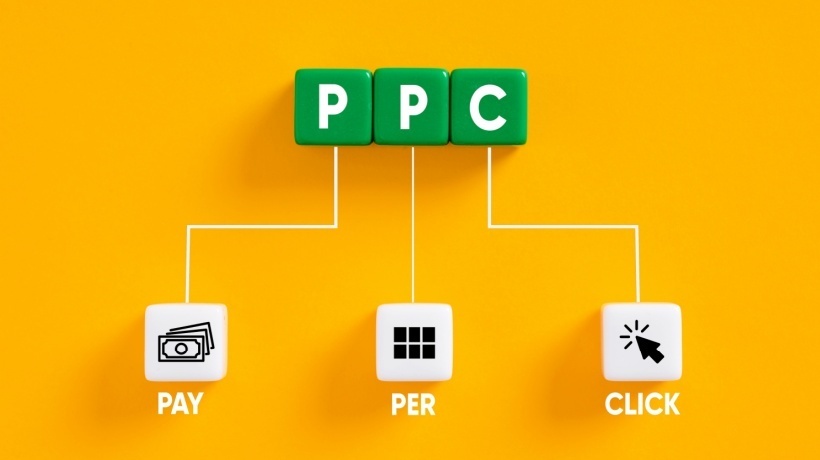
Working with an PPC (Pay-Per-Click) agency will require a substantial commitment from your marketing budget, and it can also limit the expansion of your business. The best agency can be an integral part of your business, providing tangible results as well as a great return on investment. However, every agency is not created equal and the sales process can be awash with promises that don't always translate into actual results. To cut through the marketing jargon and discover a real strategic partner, you must ask the right questions. These 10 questions will help you uncover the true capabilities, processes and values of an agency. This information is crucial in making an informed choice.
1. Do you have specific case study results of businesses similar to my own?
A general success isn't enough. You must prove their ability to perform within your industry. Ask for 2-3 case studies that detail the initial issues faced by the client as well as the specific strategies that the agency employed, and the tangible results that were achieved. You should look for metrics which are important for you. For instance reduction in cost-per acquisition (CPA) as well as a growth in conversion rates or an overall increase in return on advertising expenditure (ROAS). This will help move the discussion from a theoretical perspective to real-world, tested performance.
Who will be the main contact person on my account? And who will handle it on a daily basis?
It's normal to be sold by a senior partner but then have your account managed by a junior, less knowledgeable employee. You are entitled to be aware of who is on your team. You should ask to meet with the account manager or the strategist who is responsible for your campaign. It is possible to inquire about their schedule, certifications and experience. Knowing the structure of your team and the particular individuals assigned to your business is vital to assess the level of attention and knowledge you can expect to receive for your investment.
3. How do you determine ROI and what is your reporting process?
A great agency will provide more than daily data dumps. They must provide clear transparent reporting that connects PPC results to your business's objectives. To see a report, request an exact copy. It should be easy to comprehend, visually appealing and contain narrative insights that explain the "why". It is crucial to inquire how the company defines and reports on your key metrics and return on investment. Your response will indicate whether or not they are only concerned with vanity measures, rather than the outcomes that matter most to you.
4. What's your approach to research on keywords, audience targeting, and bid management?
The multi-part test tests the technical core competency of the candidates. Listen for a structured, logical process. Do they concentrate on the purpose of the keywords and mix match kinds? What methods do they use to stratify and segment audiences to get the best results? In terms of bidding, do you depend solely on automated strategies or do you combine platforms AI as well as human supervision with business context? Uncertain answers are a major red flag, while a detailed methodology indicates a strategic, instead of a reactive partner.
5. What are your methods of communication and what are typical responses?
Communication protocols that are clear and concise can reduce the frustrations and increase collaboration. Find out the frequency of formal reports and check-ins. In addition set expectations for daily communication. What is the time frame of a request that is urgent, or an email? Do they use a project management platform? Knowing these expectations ahead of time will ensure that your account won't be neglected and will run smoothly.
6. What is included in your price and what is the cost?
Transparency and transparency in pricing are non-negotiable. There are a variety of models agencies employ: a percentage of the ad budget for a monthly retainer, a flat-rate fee, an hourly billing system or a mixture of. Be sure to understand what you will be paying. Does the cost include the ad spend? Are there any hidden fees or set-up costs? What are the services covered by the contract for retainers? A reliable agency will be open regarding their costs and will provide a clear breakdown of expenses and services.
7. What's your company's policy on account ownership and transparency?
You should always keep the full control of your advertising accounts (e.g., Google Ads, Microsoft Advertising). Confirm that your agency will setup the accounts with your primary login. Additionally, you must be given full administrative access. Transparency lets you audit the work at anytime and, most importantly an easy transfer in the event that you decide to quit. Be very cautious of any company that does not grant you complete access to the accounts you fund.
8. How do you stay current with the PPC landscape and its frequent changes?
The world of digital marketing evolves quickly. A reputable agency needs to show a commitment to ongoing learning. You can ask about the certifications of their team (e.g. Google Ads certifications), how active they are in conferences or forums and if they are testing out new features and betas. You will know if you are dealing with either followers or leaders.
9. What are your procedures to integrate into our company and collaborating?
A true partnership will yield the best results. Ask them how they plan to join and get familiar with your company, sales cycle, and your objectives. What will the agency do to collect feedback on lead quality from your sales team? A collaborative agency should want to know your brand's voice, your distinctive value proposition, as well as your internal KPIs in order to ensure that your PPC strategy is in alignment with your overall business objectives.
10. What are the terms of your contract and how can you terminate?
In the end, it's important to know what legal obligations you've taken on. Be sure to inquire about the initial contract length, renewal terms, and any auto-renewal clauses. The most important question is about the end of the contract. Are there notice periods? Are there any early termination charges? A reputable agency that is confident it is able to deliver will typically offer reasonable terms like 30-days-out clauses, rather than binding the client to a lengthy, rigid contract. Have a look at the most popular use this link on best ppc firm for blog recommendations including pay per click, click ppc, pay per click campaign, return on ad spend, google ads pricing, google adwords login, ads strategies, pay for google advertising, google conversion, a google ads and more.

The Most Effective 10 Ways Ppc Companies Use Data Analytics To Boost Their Effectiveness In Campaigns
Data analytics is no longer a supporting tool in the world of digital advertising. It is now the foundation of a effective PPC campaign. The most successful PPC companies no longer rely on intuition or standardized best practices; instead, they leverage sophisticated data analysis to drive every decision, from minute bid adjustments to major strategic shifts. By analyzing, interpreting and acting on vast datasets with a consistent approach that they can uncover untapped opportunities, and can anticipate the behaviour of their users and assign budget with precision. This data centric approach transforms PPC Management from a reactive job into a proactive, smart discipline, directly optimizing the effectiveness of campaigns and maximizing Return On Investment (ROI). The following ten strategies are provided to show how the top businesses make use of data analytics to dominate the core areas of bidding, targeting and ad design.
1. Segmentation of the audience and predictive modeling to target hyper-specifically.
Instead of targeting large demographics, companies make use of analytics to segment their audience into micro-segments. They blend first-party data (from CRMs or web-based interactions) together with information from third-party sources to create a detailed profile of their customers. Through predictive modeling they are able to identify new users that have the same characteristics as existing customers that convert the best. This allows the creation of lookalike audiences and enables hyper-targeted campaigns where ad messaging is specifically tailored to the needs and behaviors of each distinct segment, greatly increasing its relevance and conversion rates.
2. Smart Bidding Strategy: Implementation and optimization.
PPC firms use data analytics to select and guide platform-based smart bidding strategies like Target CPA (Cost-Per-Acquisition) or Target ROAS (Return on Ad Spend). They don't "set and forget". Through analyzing historical performance data, conversion trends, and seasonal patterns, they provide AI with top-quality conversion data and establish realistic, data-driven targets. The AI is monitored continuously and targets are adjusted, and additional data is fed to it to ensure the algorithm is able to learn and produce the best results.
3. Keyword Refinement by Search Query Intent Analysis.
One of the most fundamental and effective uses of data is continuous analysis of search term reports. PPC managers use this information in order to gain an understanding of user's intent. They then eliminate irrelevant and unprofitable queries which take up their budgets. Concurrently, they discover new, high-performing keyword opportunities--including long-tail phrases with high commercial intent--that they can add to their campaigns. This constant cycle refinement makes sure that the advertising budget is focused on keywords that are likely to generate a valuable result.
4. Ad Creatives Optimization with Multivariate A/B Testing and Multivariate Tests.
Data analytics allows advertising design to transcend the realm of guesswork. The firms conduct structured A/B (comparing two variants), or multivariate (testing multiple elements simultaneously) tests on headlines, descriptions, pictures, or call-to actions. The companies employ statistical significance to be confident about winning variations. This ensures that choices are based on actual user responses and not merely on opinions. These findings can be used to create campaigns and to help guide the design direction of future ads. This results in a continuous increase in Click Through Rates (CTRs) and conversion rates.
5. Modeling Attribution for Budget Allocation across Channels.
Leading companies use attribution models that are based on data (like Google's Data-Driven Atribution) to understand the full customer journey. These models do not grant credit just to the final click, but rather analyze every touchpoint, from an initial brand awareness video to an end-of-day click for retargeting. These reports reveal which campaigns, keywords and audiences have the most influence on the start and progression of the conversion process. This data allows better budgeting, shifting expenditures to initiatives that will drive increase within the high-funnel.
6. Geographic and Time-of-Day Analysis Results.
PPC businesses can increase their efficiency by splitting performance data into geographic and time segments. They can determine which regions, cities as well as postal codes, yield the greatest return on investment. They also look at the conversion rates and CPAs based on the hours and days of the week. This data can then be utilized to alter ad and location bids. It is crucial to increase bids during the peak times of performance and to reduce or stop spending in low yield times.
7. Competitive Intelligence and Auction Insights Analysis.
PPC platforms offer auction insights data that shows the frequency with which your ads are appearing alongside certain competitors and what your impression share is relative to them. Analytical companies don't simply look at this information on its own. To comprehend how the competitive landscape impacts their business, they can compare this data with their own performance measure (such such as CPC or conversion rate). If they notice that a new competitor is entering the auction and is increasing costs and they are able to quickly alter their bidding and differentiation strategy.
8. Device-specific performance optimization.
User behavior and conversion rates can vary dramatically across devices. Data-savvy businesses analyze performance according to device type (desktops tablets, mobiles). They look at metrics such as bounce rates, page per session and conversion rates for each device. The data they collect can be used to adjust device-specific bids. For example, if mobile users convert at a an increased rate than tablet users, bids on tablets may be reduced.
9. Performance of the landing page and Conversion Rate Optimization (CRO).
The work performed by the PPC agency doesn't stop after the user clicks. They employ analytics tools such as Google Analytics 4 to track the user's behavior on websites. They employ metrics like bounce rates, time on the page, and click-through rates on the on-page elements. Through comparing specific landing pages with PPC conversion rates and CPA they can pinpoint pages-level bottlenecks. They can provide data-backed advice for A/B testing of elements on the page, such as headlines, forms, and trust indicators to increase overall post-click performance as well as boost ROI.
10. Seasonality and Trend Prediction for Proactive Strategies
PPC firms are able to discern seasonal trends by analyzing historical data over a period of time and can anticipate future fluctuations. They can then be proactive, rather than reactive. They can suggest increasing budgets to coincide with high volume seasons and launching campaigns at the most appropriate time, or stopping subjects that are not performing well during times that are known to be slow. This approach is based on data to ensure that campaign strategies are always in line with market trends to meet demand at the highest level. Take a look at the recommended https://bestppcfirm.com/ for site info including leads google, free business ads, local advertising, advertising on search engines, pay for google ads, advertise on google shopping, ads per click, ppc ad agency, local advertising, ppc advertising campaign and more.