The first step in choosing the right robotic cleaner is to understand the pool. A robotic cleaner can be an investment of a significant amount and its performance will depend on the way you adapt it to your particular swimming pool. Overlooking these details can lead to inefficient cleaning or damage to your pool or machine, and eventually, buyer's remorse. This comprehensive guide details the top 10 specifics to be aware of before purchasing an outdoor pool.
1. Primary Surface Material
This is the most crucial factor. The interior finish of your pool will determine the type and the size of brushing mechanism the robot requires to effectively remove dirt without harm.
Concrete/Gunite/Plaster (including Pebble Tec & Quartz): These are rough, durable surfaces that often develop algae films. They require a robot equipped with stiff bristle (often coated with nylon or vinyl) brushes that are able to vigorously scratch and clean the surface to break up biofilms that have been embedded and dirt.
Vinyl Liner: Vinyl, a soft and flexible material, can be easily punctured. A robot designed for vinyl should have soft, non-abrasive brushes (typically pure vinyl or rubber) and wheels with no sharp edges. If you're using a concrete cleaner, the stiff brushing can result in premature wear and tear on the liner.
Fiberglass: Fiberglass is a shell with an extremely smooth, gel-coated surface. Abrasive materials, like vinyl can scratch or scratch surfaces. The ideal robots are those equipped with brushes that are not brushed or soft rubber brushes. A robot that can clean more effectively with less effort and on an area that is smooth, will usually perform the task.
2. The form and complexity of the pool:
The geometrical layout of your pool determines your navigational intelligence and cable size required.
Freeform or rectangular What is the best choice? A rectangular pool is easiest to maintain. The majority of basic robots are able to handle the job. The curves in freeform pools, kidney-shaped pools, and L-shaped pools can cause robots to become stuck or even miss the curves completely. To ensure complete coverage, it is recommended that a robotics system with an algorithmic navigation system (gyroscopic or smart-sensing.) should be utilized.
Coves, Ledges and Transitions: The transition from the floor of the pool to the wall (the "cove") is an area where debris could be deposited. Make sure the robot is specifically designed to remove this surface. Also, make sure that the robot is able to clean large, flat shelves or Baja shelves if you have shelves. Some models only work on floors and walls.
3. The dimensions of the swimming pool (length, width and maximum depth) are:
These measurements are not negotiable when selecting a device with an adequate power cable.
Cable Length: The general rule of common sense is that your cable of the robot should be at least the length of the longest length of your pool (usually the length) with some extra feet to accommodate routing around the perimeter and to ensure that the power source is well-adjacent from the water. For pools of medium size 60 feet of cable should be sufficient. Before purchasing, take a measurement of the length of your pool.
Depth Capability Many modern robotics are able to clean depths of up 8-10 feet without issue. If you have a pool with a depth of more than 10 feet, then you'll be required to verify the robot's maximum rating. If you go over it, the pump's motor will be strained and the warranty is void.
4. Water Level and Tile/Coping Detail:
The importance of cleaning is at the point of contact between the structure of the pool and the water.
Waterline Tile Cleaning It is a feature that is commonly found in robots of medium to high-end price. If you have constant scum marks on tiles stone, glass or the waterline of your house, you will want to select a model which is marketed as having a great waterline cleaning capability. It's usually a combination of a modified climbing pattern, and specialized brushing at the top.
Coping Material Materials that is used to cover the pool wall can be either concrete, stone or pavers. It could entrap the cable of a robotic if it has an aggressive, sharp overhang. Consider this when routing cable.
5. There are numerous elements and obstacles within the pool.
A pool with fewer hazards is easier than a pool that is cluttered with debris.
Main Drains and Vents: Make sure the main drain covers are securely attached to the floor of the pool. Drains older than 10 years that protrude could trap robots. In general, floor water returns vents do not pose any difficulties.
Steps with seats that are built-in as well as ladders and steps could disrupt a robot's routine of cleaning. Ladders that are placed on the floor using their legs can trap robots. To clear or climb steps and benches, a robot needs to have sufficient strength and traction. Simple navigation robots can stay clear of these areas, while more intelligent models will handle these areas.
These flat, large surfaces must be cleaned similarly to steps. Check that the robot can effectively navigate horizontal surfaces.
6. Points of entry and exit to the pool (for the robot)
Consider the practicalities of how you can get the robot into and out of the water.
Physical Access. Do you have the robot that has to be carried a staircase, across a platform, and then dropped into the ground? Its weight is an issue in this case. A robot weighing 25 pounds is easier to handle every week than one weighing 40 pounds. This situation almost calls for an storage caddy.
Above-ground pools: Robots that are specifically designed for aboveground pools are less popular. They tend to be smaller and do not have the capacity to climb walls, as they are designed for the floor and lower portions of the walls only.
7. Type and Volume
What features you require will depend on the main "job" that your robot will be required to perform.
If this is a significant issue, a filtration solution is vital. To capture microscopic particle, you will require a machine with cartridges that are ultra-fine (pleated paper) or with a very compact mesh.
Leaves (including twigs) as well as acorns and acorn twigs: To handle larger debris, you'll require an automated system that has the capacity of a large canister or bag for debris and a pump that is powerful enough to remove it, and a filtration system that isn't blocked. Certain high-end models have impellers specially designed to crush large leaves, preventing blocking.
8. The location of the power source and the type of outlet:
Robotic cleaners make use of low-voltage DC powered by a converter which can be connected to any standard outlet.
GFCI Outlet Safety: To ensure security reasons, the power source is required to be connected to the Ground Fault Circuit Interrupter outlet (GFCI). It's not a matter of negotiation. An electrician must install it if not installed.
Distance from Pool In order to keep the transformer safe from splashes of water and weather, it should be set at least 10 feet from the pool. Your cable should be sufficient to reach your pool at the furthest corner.
9. Local Climate and Storage Environment:
The way you keep your robot will alter its lifespan.
The storage of robots in the winter is strictly forbidden by the majority of manufacturers. UV rays damage cables and plastics. It is essential to have a cool, dry and shaded area (like a garage or shed) to store the cable and robot when not in use for long periods.
In-Season Use: If use the robot frequently the storage caddy will allow you to store it neatly beside the pool without becoming a tangled mess in the deck.
10. Current Pool Filtration and Circulation:
Robots can function independently however it's still part of your pool's ecosystem.
Additional function: Be aware that the role of the robots is to clean up settled dirt and clean surfaces. It's not a substitute for your pool's primary filtration and circulation system. This system is responsible for filtering particles as well as dispersing chemicals, and also stopping the growth of algae. The robot functions as a cleaner supplementary to your pool, reducing the burden placed on your primary filters.
Chemical Balance: Even a perfectly clean surface can be susceptible to algae growth if your water chemical composition in your swimming pool is not balanced. The robot will help to maintain cleanliness but won't replace the importance of proper sanitization. Read the recommended pool-reinigungstipps for more tips including pool rovers, in the swimming pool, any pool, kreepy krauly pool cleaners, swimming pools stores near me, pools pro, pools pro, pool cleaning systems, best way to clean swimming pool, discount swimming pools and more.
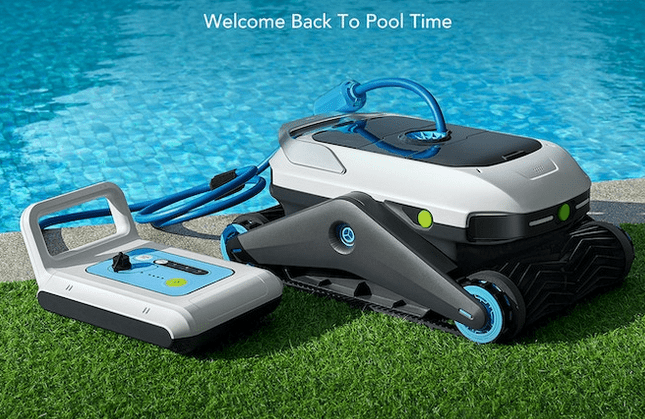
Top 10 Tips For Pool Robots To Clean Your Pool That Are Simple To Use And Maintain
While the cleaning of your pool is the main objective however, the daily experience of using a robotic pool cleaner is determined by its ease of use and upkeep. A robot that's difficult to clean, store, or manipulate will be a source of frustration and undermine the ease of use it promises. These elements determine whether the robot seamlessly integrates into your pool care routine or is a chore in itself. A user-friendly design is essential to long-term satisfaction.
1. The Critical Test of Weight Test and Handling Test
The single most frequent interaction you'll have with your robot will be lifting it into and out of the pool. Weight is a crucial aspect.
Weight range: Robots are available in a variety of weights ranging from 15-16 lbs. to 35-40 pounds. While heavier models are more robust and durable, they can also be more difficult to lift for the user. This is especially true in the event that the surface of the machine is wet or slippery.
Handles & Grips: Check the design. Do you have one or two handles that have a comfortable design that are comfortable to hold? The handles that aren't properly placed on the massive units create a stumbling block and risky to carry. This is a vital physical ergonomics aspect.
2. The top-loading filter system is non-negotiable:
This is the most crucial maintenance function. Once you've lifted the robot you'll have to get access to the filters. The top-loading design allows you to take the filthy and blockage-ridden filters from the top without turning it. Flipping a bottom-heavy, dirty robot risks dropping it and spilling debris into the pool or on your deck, and is generally a messy, difficult process. Top loading makes it simple, clean and simple.
3. Maintenance of Filter Cartridges, and their longevity
The filters need to be replaced regularly as they are consumable.
Simple Removal: Pleated paper and fine mesh cartridges should be easily removed from the housing. They must be cleaned thoroughly with a hose sprayer until all debris is removed and the water runs clean.
The paper cartridges degrade over time with repeated washing. It is recommended to replace them at least once or twice a year, based on the frequency you use it. Mesh cartridges with higher quality are usually more durable and will can last for several seasons. Take into account the cost of replacing cartridges before deciding.
4. The cords can be twisted - a must To Have!
This feature eliminates tangling - one of the biggest issues in terms of usability. A swivel device where the cord is attached to the robot or floating allows it to freely rotate 360 degrees as the robot changes direction. If not used it will eventually get knotted and twist itself. This could limit the reach of the robot, cause it snagged, or harm the internal wiring.
5. A Storage Caddy Can Change Your Life:
The storage caddy is a dedicated device that offers an important improvement in the usability of.
Transport: It permits you to move the robot from the storage area to the poolside without carrying the entire weight.
Storage: It allows you to store a robot in a specific place with the cord tightly wound, thereby protecting the robot from UV damage or dirt. The robot is not able to sit directly on the surface, thus protecting its components. Models that feature the caddy demonstrate a commitment to a full-featured user experience.
6. Cable Management and length
The power cable plays a crucial role within the overall system.
Cable Length: It must be long enough to allow the cable to extend all across to your GFCI outlet to your pool's farthest edge with a little extra. To connect the cable to your deck, measure the pool's longest edge and add several feet. Cables that aren't long enough cause the robot to be useless.
Floatation: The cables should have integrated foam floats spaced along its length. This prevents the cable from sinking into the track or drive of the robot, which could result in damage or cause tangling.
7. Cleaning Cycle Simplicity & Control:
The interface of the robot should be simple.
On-Unit Controls vs. Simple models might have just one button. Some models include a smartphone app or remote control for choosing cycles. Consider which you prefer - the simplicity of buttons on the physical side or the advanced programming offered by wireless remotes.
Clarity of Cycles: The three cycles (Quick Full, Full, Floor Only), should be clearly marked. The robot must provide precise feedback (e.g., blinking lights, or beeps) to verify that it is in the process of starting.
8. Brush and drive Component Access, Wear and:
Although not an everyday chore, the brushes as well as tracks are wear items.
Inspection: It is crucial to periodically inspect the brushes and track or wheels.
Easy Replacement: Parts that can be replaced by the customer is an important advantage. Check to see whether there are replacement brushes, tracks, and drive belts that are available through the company. Also, check the manual for clear guidelines on how to get them changed. This can extend the lifespan of your equipment and cut down on the cost of professional maintenance.
9. Physical Storage requirements:
You'll require a space for your robot to be stored.
Space to store the robot as well as its power source and the wire that is coiled, you will need an area that is cool dry, shaded, and dry like a garage or shed. It shouldn't be kept in the direct sun because UV rays damage the cable and plastic sheathing.
Storage outside of season Storage: The unit should be cleaned and dried thoroughly before winter storage or long-term storage. Manuals will give specific instructions and often recommend storing the unit in a certain orientation to protect the internal components.
10. The Ecosystem of Customer Support and User Manual:
Finally, ease of use is aided by a good manual and help.
The clarity of the manual: A well-written guide with clear troubleshooting instructions and explanations of error codes as well as diagrams is essential for solving minor issues.
Accessibility to support: Check the brand's reputation for customer service. Does the company have a useful website including FAQs, video tutorials, or a dedicated customer service line? To ensure a pleasant experience, it is vital to have access to knowledgeable support in the event of an issue. Read the top rated swimming pool robot cleaner for more tips including robot to clean the pool, swimming pool sweeper, pool website, pool s, a swimming pool, swimming pool cleaners near me, aiper robotic pool cleaner, swimming pools stores, best way to clean swimming pool, pool waterline cleaner and more.
